

Hair Science · Key Ingredient
Rosemary for
hair growth
& scalp health
What science says about rosemary, why it works, and which compounds make it one of the most studied natural ingredients for hair growth and loss prevention.
Full Benefits
Six reasons rosemary belongs in your hair care routine
From root to tip, rosemary targets the full hair health cycle, not just growth, but strength, scalp balance, and long-term follicle health.
Stimulates Hair Growth
Rosemary improves blood microcirculation to the scalp, delivering more oxygen and nutrients directly to each follicle extending the active growth phase and reducing the time hair spends dormant.
Reduces Hair Loss
Rosemary's active compounds block DHT at the follicle level — the hormone responsible for most common hair thinning patterns — helping hair stay anchored and grow with greater density over time.
Strengthens the Hair Fiber
Regular use reinforces the hair shaft from within, reducing mechanical breakage during brushing and styling, and increasing resistance to heat and environmental damage.
Balances and Purifies the Scalp
Rosemary's natural antimicrobial properties regulate excess sebum production and clear buildup without disrupting the scalp's natural microbiome — creating the clean, balanced environment healthy follicles need.
Adds Shine and Softness
Beyond growth, rosemary smooths the cuticle and adds a natural luminosity to the hair improving texture and manageability wash after wash without residue or buildup.
Supports Scalp Health Long-Term
Unlike topical stimulants that work only while applied, rosemary's bioactive compounds build up gradually in the scalp tissue — delivering cumulative benefits that improve with consistent use over 8 to 12 weeks.
Products with Rosemary
Hair care products formulated with rosemary extract
Each formula combines natural rosemary extract with complementary actives for visible results from the first week of use.
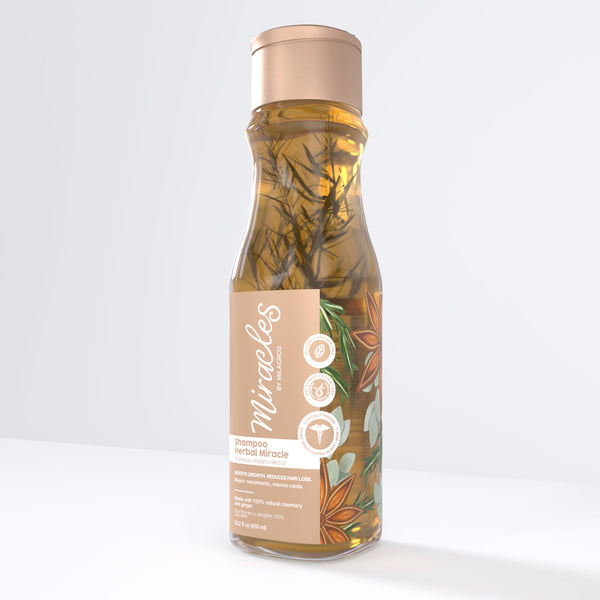 Shampoo · Growth
Herbal Miracle · Shampoo
Shampoo Milagro Herbal
Rosemary, Ginger, Red Onion Extract & Amino Acids · 15.2 fl.oz.
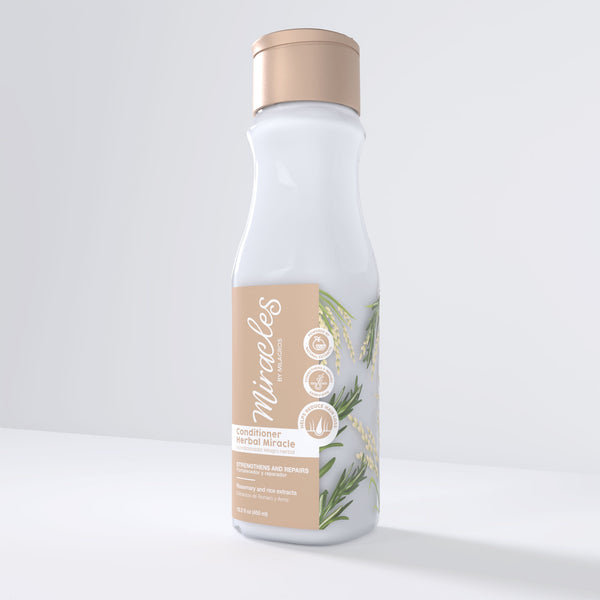 Conditioner · Frizz Control
Herbal Miracle · Conditioner
Acondicionador Milagro Herbal
Rosemary Extract, Rice & Amino Acids · 15.2 fl.oz.
 Mask · Deep Repair
Density Boost · Shampoo
Mascarilla Capilar Reparadora Intensiva Con Extracto De Cebolla y Péptidos
Red Onion Extract, Peptides & Caffeine · 15.2 fl.oz.
The Science
Why rosemary works (the compound breakdown)
Rosemary's effectiveness for hair growth is one of the most studied in natural dermocosmetics. Here's what each active compound does at the follicle level.
Ursolic Acid — Primary Active
Rosemary's most studied compound for hair growth. Ursolic Acid inhibits 5-alpha reductase, the enzyme that converts testosterone into DHT directly reducing follicle miniaturization at its hormonal root cause.
Organic Sulfur - Structural Compound
Carnosic Acid — Antioxidant Shield Neutralizes free radicals that damage follicle cells and accelerate scalp aging. Carnosic Acid also promotes nerve growth factor (NGF) activity, which supports follicle regeneration and tissue repair at the scalp level.
Rosmarinic Acid — Anti-Inflammatory
Reduces scalp inflammation, a key underlying factor in many hair loss patterns. By calming the follicle environment, Rosmarinic Acid allows hair to grow without the chronic stress that shortens its active cycle.
1,8-Cineole — Circulation Activator
The compound responsible for rosemary's stimulating effect on the scalp. 1,8-Cineole directly improves cutaneous microcirculation, increasing the supply of oxygen and nutrients to the dermal papilla, the control center of each follicle.
triple-action mechanism, how rosemary's compounds work together
Key Research
A study published in SKINmed Journal compared rosemary oil to 2% Minoxidil over 6 months, both produced equivalent hair count increases, with rosemary showing significantly less scalp itching as a side effect. The mechanism identified: improved microcirculation and DHT inhibition at the follicle level.
How to Use
How to use rosemary in your hair routine
Rosemary works cumulatively. Most users notice reduced shedding within 2 to 3 weeks, with visible growth results between weeks 8 and 12 of consistent use.
Herbal Miracle Shampoo
Apply to wet hair and leave on for at least 5 minutes before rinsing. this contact time is key for the active compounds to reach the scalp. For oily scalp, apply the conditioner first, rinse, then follow with the shampoo.
Shop Shampoo →Herbal Miracle Conditioner
After shampooing, apply from mid-lengths to ends. Massage gently and leave on for 3 to 5 minutes before rinsing. For best results, use consistently after every wash session.
Shop Conditioner →Herbal kit
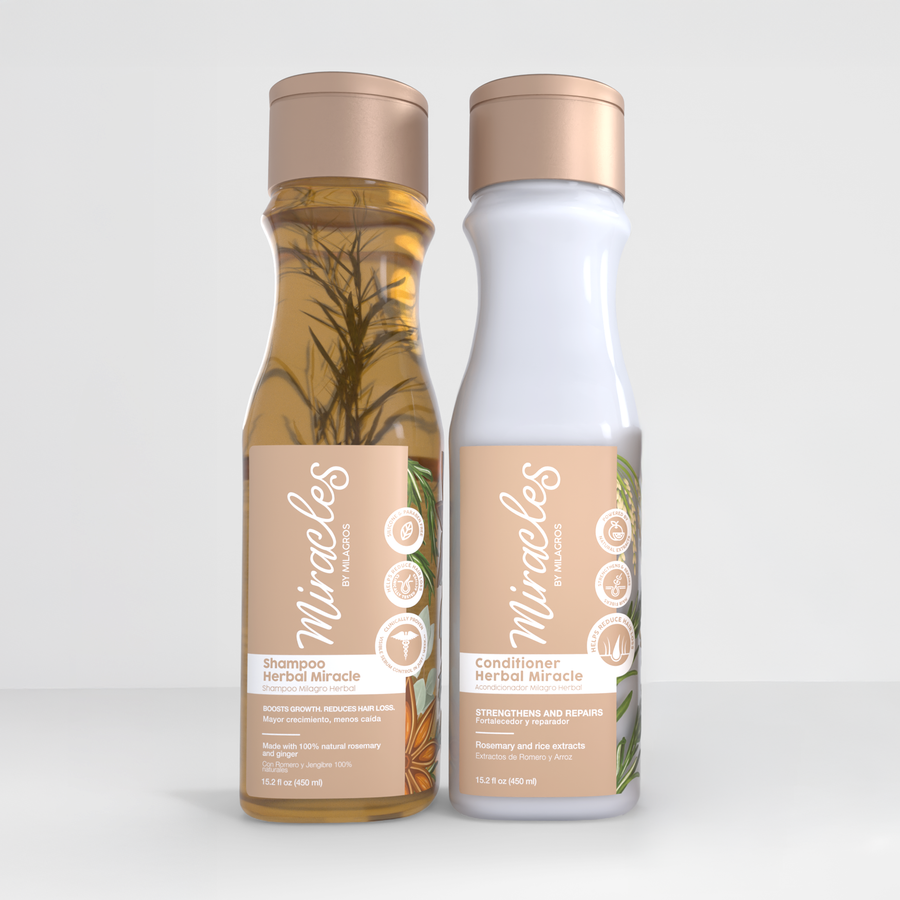
Try this kit that contains the shampoo and the conditioner, both with rosemary extact
Shop Kit →FAQ
Common questions about rosemary for hair growth
Grounded in science. Written for real questions.
Yes, and it's one of the most studied natural ingredients for this purpose. Rosemary contains Ursolic Acid, which inhibits the enzyme that produces DHT, and 1,8-Cineole, which improves scalp microcirculation. Both mechanisms directly support the hair growth cycle.
Most people notice reduced shedding within 2 to 3 weeks of consistent use. Visible new growth typically appears between weeks 8 and 12. Rosemary works cumulatively... results build over time and improve with consistent use.
A study published in SKINmed Journal found that rosemary oil produced equivalent hair count results to 2% Minoxidil over 6 months with significantly less scalp irritation. It works through a different mechanism: improving microcirculation and reducing DHT, rather than directly stimulating follicles.
Yes. Rosemary extract is gentle and compatible with color-treated, bleached, and keratin-treated hair. It does not strip color or interfere with chemical treatments when used in a properly formulated shampoo or conditioner.
Shampoo: 2 to 3 times per week, leaving it on for at least 5 minutes for best results. Conditioner: every wash, from mid-lengths to ends, leaving on 3 to 5 minutes. Consistency over 8 to 12 weeks is what produces the most significant results.
Yes. Rosemary works at the scalp and follicle level, making it effective regardless of hair type, texture, or porosity. It is particularly beneficial for oily scalps, slow-growing hair, and hair showing early signs of thinning or loss.
Ready to try rosemary for your hair?
Salt-free, paraben-free, cruelty-free. Two products. One complete herbal routine
Shop OUR ROSEMARY SHAMPOO →